
Seven minutes — that’s approximately how long the only public meeting lasted with the Indiana Utility Regulatory Commission last Wednesday, in regard to the proposed AES transmission line to service the Google data center in Monrovia.
No public comment, no signs allowed, no opportunity for remonstrance before this project will see final approval from the one and only governing body to hear it.
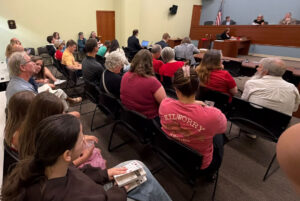
Residents had counted down the days. We coordinated carpools and parking, and decided on the color red to signal “STOP” to this project. And we got seven minutes.
Not to speak. Or to demonstrate. But to have the powers that be, look us in the eye — to see our children and our parents, our friends and neighbors — and question why it is that so many of us would show up for a procedural hearing that wouldn’t last the amount of time it took us to parallel park in downtown Indy.
It’s a question I hope that lingered long after we left.
Residents in Morgan County have known the data center was coming. It is certainly hard to miss. What wasn’t made clear — by Google, or by county officials — is just how far their impact would extend beyond their own land and barbed-wire fencing.
On April 22, AES Indiana filed a petition with the Indiana Utility Regulatory Commission for approval of a high-voltage transmission line, spanning 10 miles from Monrovia to Martinsville. This project was specified as a “PROJECT REQUIRED PRIMARILY TO SERVE A LARGE LOAD CUSTOMER.” A required step for AES to complete a project of this magnitude. A project that, along every proposed route, would go through private property.
As AES engineers drew lines behind closed doors in preparation for their petition and subsequent public release of the project, unsuspecting Morgan County residents were quietly living their lives and tending to their land.
Spring was on the horizon, gardens were being mapped out, fields were being planted, fencing around pastures was being repaired after a long cold winter, and all of our beautiful Morgan County landscape was awaking from its slumber.
In what may as well have been as reliable as a paper airplane getting to its target, AES quietly slipped a generic postcard into the mail to make their announcement. If you were lucky enough to receive one as an affected property owner (which many never did), you were among the first to know this was coming to our county. At least, according to elected officials.
Suddenly, summer plans were halted.
After all, if they are going to take a 200-foot-wide easement of my 242-foot-wide pasture, do I need to be fixing this fence? If they will destroy my 20 acres from one end to the other, going over my planned homesite and where I’ve already put utilities, do I bother pouring that concrete pad for my barn this year? If they are going to clear-cut my forest and take out my chicken coop, should I worry about getting chicks this year? In an instant, several families had these questions and many more, as their planned futures abruptly hung in limbo.
Google has continuously said they’d like to be “good neighbors” to the people of Morgan County.
Is it neighborly to come into a community and not account for building your own power needs on your own property? Instead, deciding you’ll have a utility company act as the hatchet man for your development and try to use eminent domain law to handle your unwilling neighbors? A law that, I would like to remind you, was not intended to service one private customer.
No matter how you spin it, we know what this proposed transmission line is for.
Google, if you’d like to be a good neighbor in the county, it’s not too late to change course, as I believe we’ve gotten off on the wrong foot.
You publicly highlight how committed you are to protecting the public by signing the Ratepayer Protection Pledge, but you are not taking into account the very real cost this project would be to landowners. Yes, the cost in lower property values, and the loss of income from our crops. Loss in usability and future development. And in so many other ways.
But there are some losses that we could never quantify in dollars. Value that can’t be measured by an appraisal firm. Land deeper than it is wide as you measure how much to pay for an easement from one end to the other. Holding the roots of our families and our legacies.
Reasons enough to drive young and old out of our quiet place in the country to remind you, it’s the consent of the governed.
And we do not consent.
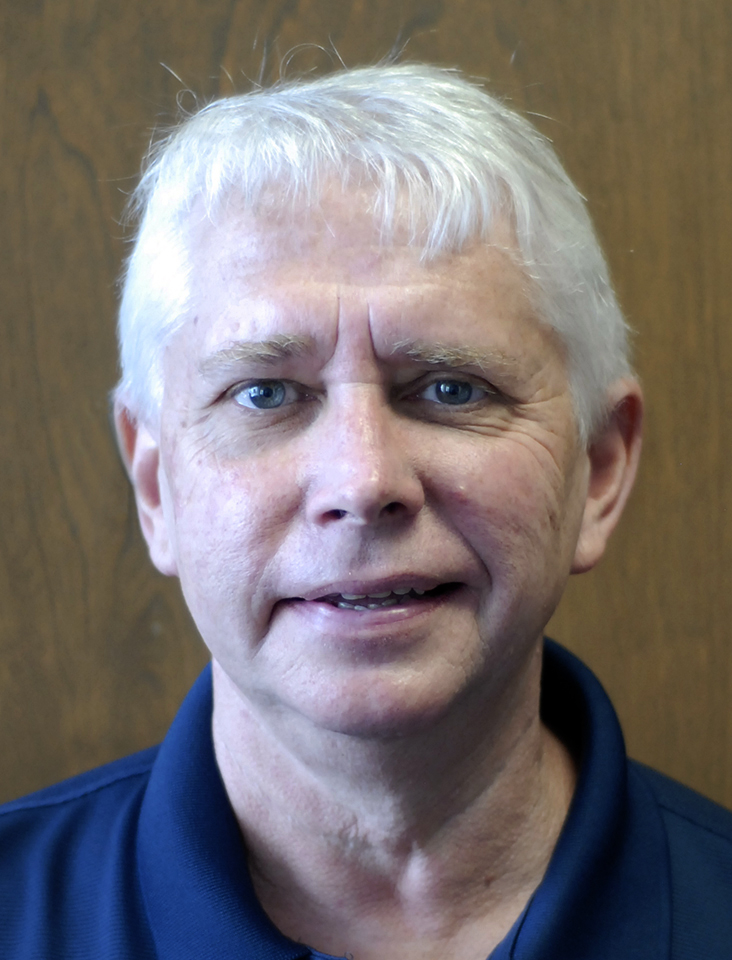
Autumn Sojka is a Morgan County resident and founder of Save Morgan County, a group committed to preserving the beautiful Morgan County landscape, resources and private property rights, while fighting against government overreach, big tech, big utility and big business.