

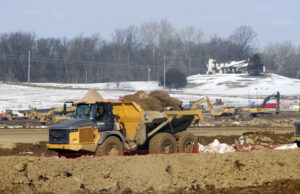
MORGAN COUNTY — Since the news broke early last year that a data center could be coming to Morgan County, everyone’s been weighing in on how they feel about it.
County officials have argued that it would be a boon for the county, as it scrambles to replace the anticipated revenue drop following last year’s Senate Enrolled Act 1 tax cuts — a trillion-dollar company moving into the neighborhood would certainly help their cause.
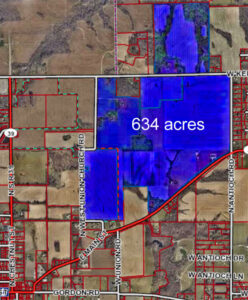
Local residents, meanwhile, have voiced near universal opposition to the 634-acre data center campus planned for Monroe Township.
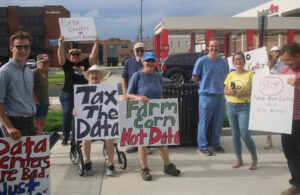
When the county commissioners moved to rezone the initial 390 acres of farmland for data center use last February, protesters packed the normally empty board meeting and voiced their concerns for hours. In October, when the commissioners planned to rezone an additional 158 acres for the data center, protesters again pleaded with the county to reconsider.
Meanwhile, two lawsuits were filed by local residents against the county over the data center, with the plaintiffs in both cases arguing that building a data center near their properties would cause “immediate and irreparable loss of property values and the use and enjoyment of the property.” Additionally, the plaintiffs argue the rezone does not align with the county’s formal comprehensive plan.
For much of last year, all this talk took place without anyone knowing which company was behind the data center project. Many residents came to believe that Google was the company buying land in Monroe Township long before Google formally announced itself as the tech company behind the project near the end of October.
The mystery surrounding the company, as well as the fact that a number of elected officials with knowledge of the data center signed non-disclosure agreements preventing them from talking about it, played a significant role in sullying the prospect of a data center for many local residents.
But Google hopes to change that. At the end of last year, the company announced it would be donating more than a million dollars to at least three Morgan County organizations, which include the Monroe-Gregg School District, Churches in Mission and the Community Foundation of Morgan County.
And now, the company wants to begin getting to know its future neighbors, says Broderick Green, public affairs manager for Google.
Green sat down with The Correspondent last week for a Google Meet interview, where he defended the company against some common criticisms levied against it, and made the case for why Morgan County will benefit from having a data center campus in its backyard.

Water, noise, property value
The start of the interview focused on the origins of the project, though Green was unable to offer many answers as he joined the company in August 2024, well after the project was underway.
Morgan County began talks with Google about a potential data center project during the first quarter of 2024, but Mike Dellinger, executive director of the nonprofit Morgan County Economic Development Corp., previously told The Correspondent that Google has been in communication with AES Indiana regarding energy needs for the project long before the county got involved, though he could not say when those discussions began.
Given his relatively new tenure with Google, Green wasn’t sure how long the company had been eyeing Morgan County for a data center, but he did say the area was likely chosen due to a variety of factors, such as available acreage and the proximity and capacity of utility infrastructure.
Green said he was unaware of any plans for Google to possibly buy more land in the area.
Dellinger previously told The Correspondent that a second company had wanted to construct a data center campus in Morgan County, but they ultimately were turned away after AES said they only had the capacity to serve one campus. Google approached the county first, and that’s why it was picked.
Green then responded to some local criticisms of the data center, like concerns that the campus will cause significant noise pollution and require extraordinary amounts of water.
“These projects are evaluated early on to make sure there’s available capacity,” Green said. “For this project specifically, onsite groundwater will not be used for cooling or domestic pullable needs. So, absolutely ask questions, get the understanding about how usage happens. But, you know, we are very conscious of any resources that we’re gonna be using on our data center projects.”
Green was then asked to respond to local complaints about potential noise from the data center, and specifically one Monrovia official’s recent comments that no one would want to purchase new housing in the area because they would not want to live next to a data center.
Communities living near data centers throughout the country have frequently reported health concerns linked to the constant hum from data centers. Chronic exposure to noise pollution can cause sleep disturbance, headaches, hearing loss, anxiety and cardiovascular risks, amongst other ailments.
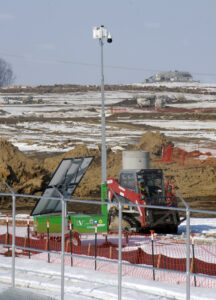
“Despite their size, our campuses are typically pretty quiet,” Green said. “And we certainly are going to follow any local regulations around noise. We’re very mindful of that.”
When asked if he would see any problem living next to a data center, Green said he would not see a problem.
Green was asked to respond to the two lingering lawsuits over the data center in Morgan County, specifically if he thought homes near data centers would see diminishing property values.
While admitting to not being an expert, Green pointed to a 2023 study conducted by George Mason University that looked at the connection between data centers and for-sale home prices across northern Virginia.
The study found that homes closer to data centers sold for more money than houses farther away, which may seem surprising to some, but it was exactly what the researchers expected. The study explained that data centers tend to be built in areas with good roads, reliable utilities and proximity to jobs and airports, factors that are more attractive to homebuyers.
A community partner
Eventually, Green looked to put a human face on the tech giant, describing Google’s desire to become “a community partner” to Morgan County. More specifically, he wanted to showcase the contributions Google was ready to make to the community it intended to join.
“We certainly look to support schools and other initiatives that are going on there in the community,” Green said. “But there’s also improvements to infrastructure. We will certainly cover the costs of the infrastructure we need, and that adds a broader benefit. We do make sure that we listen to the local stakeholders to understand what the needs are in the community.”
Green was asked how Google might convince Monrovia residents, specifically, to change their minds about living next to a data center.
“It’s getting to know the people who are part of the project,” Green said. “Getting to know the team that’s involved, understanding how we operate, and being responsive to concerns that they raise, you know, the ‘what’s in it for them’ directly. That’s not always an easy question to answer, but yes, there is a benefit to the broader community.”
“We feel confident that we’ve chosen a location that is not only gonna allow us to meet our needs, but also work very closely with the community to make this a partnership.”
“Does it mean we’re gonna change everybody’s minds? Not necessarily,” Green said. “But we want people to get the facts, and to make sure they understand what this project is, what it isn’t, and the ways that we want to establish a long-term relationship with this community.”
As for how long Green sees that relationship lasting? Decades. The county’s abatement agreement with Google is for 40 years.
Green said Google’s earliest data centers are still in operation, and once the Morgan County campus is built, he believes it will stand for years to come.
As the interview came to a close, Green said Google was planning a town hall in Monrovia in the near future, where residents would be able to come and hear from the company itself and ask questions. A date for this town hall has not yet been set.