

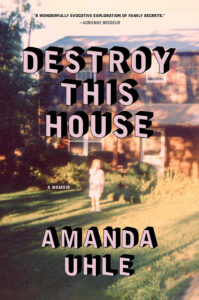
MARTINSVILLE — The Long family moved from Long Island to a “great big” house in Foxcliff during the mid ‘80s, a time of general optimism and excess in the United States.
At 6,800 square feet, this “great big” house was a colossal upgrade compared to the family’s 1,000-square-foot house back in New York, and dwarfed the size of most Martinsville homes both then and now.
The front yard of the Long house faced the golf course, and the backyard greeted the lake, complete with its own dock. Inside the home, formerly owned by a diamond broker, were two kitchens, a walk-in safe, 18 rooms, six and a half bathrooms, a cedar closet and a hot tub. The house was, as Amanda Uhle puts it in her memoir, Destroy This House, “an entity unto itself.”
“My mother stood under the foyer’s double-height, vaulted ceiling with her freckled arm slung tight around my shoulder and whispered a vow: to fill it,” Uhle writes.
And fill it she would over the next few years, far beyond its tremendous capacity, far past the limits of what might be considered reasonable.
Sandra Long, Uhle’s mother, was a hoarder, though Uhle didn’t have the words to describe it back then when she was a student at Centerton Elementary. Enabled by the wealth of her husband, Stephen — which he temporarily accrued through various business endeavors — Sandra bought and bought and bought.
There was never a shortage of food at the Long house; once the pantry was filled, brown paper bags of food would begin to line up outside of it, much of which would spoil before ever getting eaten.
The family was never in need of soap — if a shampoo bottle was ever low, two more would replace it before it ever fully ran out. And everyone was encouraged to use a new bottle, lest the old bottle run dry.
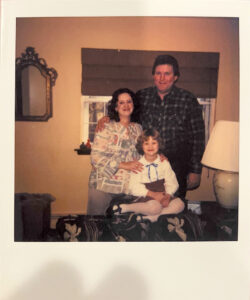
Uhle never longed for clothes, as Sandra couldn’t resist shopping for clothes at the store, nor could she stop herself from acquiring pounds and pounds of fabric for making clothes herself.
Even after the Longs went virtually bankrupt and moved away from Martinsville, Sandra still clung to anything she could get her hands on as the family fluctuated between poverty and relative stability.
Uhle, as she got older, eventually realized the situation was not normal. She grew embarrassed of the mess in her house, and her father’s indifference to Sandra’s hoarding. Uhle never invited friends over, and once even threw a lovestruck boy out of the house after he invited himself over — she was too ashamed.
What was the source of Sandra’s hoarding? To this day, Uhle still ponders the question.
“I’m always hesitant to ‘diagnose’ my mother,” Uhle told The Correspondent over Zoom. “I’m not qualified to do that. But it kind of reminds me of drug addiction. She couldn’t stop (hoarding). She couldn’t change. I don’t know what would have solved it.
“I think she had low confidence,” Uhle continued. “One of the ways she had to feel better about herself was to buy things. Which honestly isn’t that much different from most people.”
A real exaggerator
Destroy This House, a memoir about Uhle’s complicated relationship with her parents, was published by Simon & Schuster last August. While Uhle herself is a principal character in the story, she mostly serves as an observer to the antics of Stephen and Sandra Long.
Sandra was a Martinsville native, and her 1975 wedding ceremony with Stephen was dutifully reported in The Daily Reporter.
“The Prince of Peace Lutheran Church was the scene of the candlelight wedding ceremony in which Miss Sandra Cox became the bride of Stephen F. Long, Saturday evening, April 12, at 7:30,” notes the paper below a black-and-white photo of the beaming newlyweds.

It was the first of several times the Longs would be in the Martinsville paper over the next 15 years, as there was never a story too small for the little daily.
“Media was so different back then,” Uhle said. “They just reported on absolutely everything. I was very impressed when I was researching for this book — I couldn’t believe that level of detail existed.”
Newspapers proved invaluable to Uhle during the writing process, as one of her goals with the book was to find out for herself what was true about her life before she could explain it to others. Her father was a “real exaggerator,” and many stories he told Uhle and her little brother growing up later seemed improbable, whether they were about himself, his marriages and certainly his business schemes.
“When we’re little, we idolize our parents without question,” Uhle said. “As far as I could tell, we were normal. But with age, I grew to understand that my parents really were unusual people.”
Some of their behaviors were simply quirks, easy to laugh off. When the family lived on Long Island, for example, Stephen worked a job in the city, and would commute two hours each way simply because the couple could not find a house they liked closer to his work. When the Longs had guests over for dinner, in the early years, Sandra would often posture as if the family was far wealthier than it was, leading to comical situations when young Amanda would unknowingly give the game away.
Petty deception and self-imposed inconveniences never killed anyone, but the peculiarities of the Longs sometimes ballooned to dangerous levels.
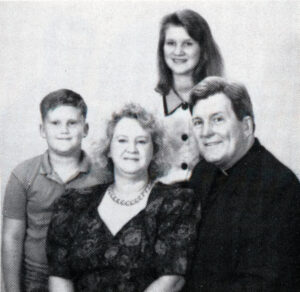
After his business ventures failed in Martinsville, Stephen left it all behind to become a priest, and the church that employed him provided the family with a modest home. The home not being technically theirs, Stephen and Sandra watched as it fell into disrepair, refusing to open their pocketbooks to fix someone else’s property.
The absurdity of this attitude eventually climaxes with Stephen shrugging off a tree falling through the home’s garage, saying to a dumbfounded Uhle that if the church wants it fixed, the church will pay to fix it. Nothing on earth was wrong.
And despite it all, Stephen seemed to make members of the church happy.
“Dad was a pleaser,” Uhle said. “He would always give whatever answer would make you the most happy. I don’t think he was ever trying to lie — he just had this outrageous optimism.”
He and Sandra, like everyone else, were products of their time.
Endless contradictions
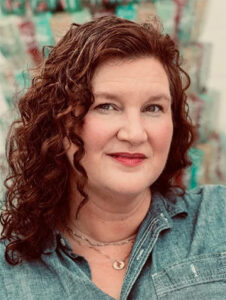
Regardless of all she went through, Uhle loved her parents. Destroy This House is not her grand attempt to tear them down.
For many years before their deaths, Uhle and her husband attempted to take care of them, sacrificing precious time in an effort to shield them from their own self-destructive behavior. Interestingly, her readers have offered a divided reaction to the later years depicted in the book, after Uhle had grown up and moved out of the Long home.
“I should never look at Goodreads,” Uhle says, laughing. “There are people on there who say things like, ‘Why did she enable them?’ or, ‘You really could have done more.’ I have a lot of empathy for parents out there with difficult children. You know, a lot of those parents stick around with their kids and help them get through those difficult times.
“People ask, ‘At what point is enough, enough?’ and I guess I never got to that point,” Uhle said.
Uhle cautioned against readers making quick, decisive judgements over the Longs, and urged those who would read her work to avoid black-and-white thinking in general.
“My parents were flawed and dynamic people,” Uhle said. “Their contradictions were endless. I wanted to capture the complexity of how real people are and give readers the ability to make their own judgements. The book really is stranger than fiction.”
It’s a book she’s wanted to write for 15 years, but the truth of what happened during her childhood eluded her. Some things she had blacked out of her memory, likely a trauma response. Others were simply things her parents did that she could not explain. Uhle didn’t have all the pieces.
But she was well-suited to writing, having worked in journalism and other jobs in the arts throughout her life. Uhle ultimately wrote Destroy This House, her first book, over two and a half years, sending snippets to her brother as she wrote to confirm the accuracy of her account.
“I love to read fiction, but I’m not so interested in writing it,” Uhle said. “The truth is much more interesting to me.”
Uhle looks at the world with clear eyes. Growing up with the Longs made her perhaps a little more suspicious than most people, and she does not share the boundless optimism that her parents developed in the ‘80s, when their Foxcliff mansion was bursting at the seams with things inside they couldn’t afford.
If the 1980s of movies like Ferris Bueller and Wall Street depicted one big, decade-long party, the 2020s are the hangover, the sober realization that perhaps not everything is OK. Of course, anyone who was there will tell you the party wasn’t all it cracked up to be.
“I remember Martinsville being extremely charming,” Uhle said. “The main part of town was decidedly more humble than Foxcliff. At Foxcliff, excess was in. But some of my favorite memories were at places like Poe’s (Cafeteria), a place where there was kind of a closeness to everyone.”
Two Americas at the same time, then and now. One of them, you might say, is the clear-eyed truth, the truth that is small-town newspapers reporting daily minutiae, and cafeteria dining where everybody knows everybody. The other America is this seductive storm, a siren call to opulence, a big party with a highly exclusive guest list. Everyone wants their name on it.
Uhle has lived in both places, as did her parents, though the latter always seemed to assume they were simply vacationing in the real world while the lofty American Dream waited for them. An adult with children of her own now, growing up in a country built upon delusions of grandeur and material hoarding, Uhle learned valuable lessons from the dreamers who raised her.
From her father, she learned how to tell the truth. From her mother, she learned when it was time to throw something away.