

The first time I covered Juneteenth, I was working as an intern for the Northwest Indiana Post-Tribune. A celebration was being held in downtown Gary, and my editor asked me to cover it.
The event itself was joyful. People pitched in lots of food, kids ran around playing games, and the people in attendance felt a sense of community. The weather was beautiful, and everyone had fun.
It was one of several stories I covered in Gary, and each time I visited, I felt more and more as if the city had earned a bad rap. Growing up 20 minutes away from the city, I always heard about how violent Gary was, and how you’d probably get shot if you went there. The warnings about Gary usually carried a tinge — sometimes a lot more than a tinge — of racism, with those who had no idea what they were talking about claiming white people would get killed by Gary’s majority-Black residents.
Gary’s reputation stemmed from a brief period in the 1990s when the city was heralded as the “Murder Capital of the U.S.” after a spike in homicides. The city still maintains this reputation, despite the fact that murder hit a 55-year low in Gary last year, with just 28 homicides recorded by police.
Why let facts get in the way of a good narrative?
When I began working in Martinsville in 2024, I had hoped to cover Juneteenth again, only to find little observance of the holiday in the city beyond closed government offices. Friends of mine outside Morgan County expressed little surprise — after all, they said, it’s Martinsville.
My experience in Martinsville made such a response feel cheap. Had I encountered racist people in the city? Sure, but — and I really must insist this — not any more than I have encountered anywhere else.
I live in Bloomington, a lovely city that also has racist people in it. It’s the city that not long ago couldn’t seem to go a week without seeing new swastika graffiti appear on downtown buildings, that contended with alleged white supremacy at its farmers market, and saw anti-Asian violence during the COVID-19 pandemic.
But these events are viewed as exceptions to Bloomington’s reputation as a “liberal oasis in a conservative state.”
When Martinsville has incidents of racism, on the other hand, well, that just proves what we all already knew: “Martinsville is racist.”
Yes, just as Gary is the murder capital with record-low murders, so Martinsville is probably the safest “sundown town” people have never visited.
It is not at all my intention to downplay racism in Martinsville. But my contention is that the city is often unfairly depicted as the worst of the worst, a city apparently so racist that social media users mindlessly claimed a Juneteenth celebration here would be “a trap” — a particularly ludicrous comment repeated by many.
Why do people say such things about places like Gary or Martinsville? After all, the proof of such claims is usually pretty thin.
When talking about Martinsville’s racist past, people love to conjure the ghost of Carol Jenkins, a Black woman who was murdered in Martinsville … by a man from Hendricks County. Nevertheless, the city of Martinsville, despite having nothing to do with Jenkins’ death, installed a memorial for her outside city hall in 2017, and sought reconciliation with her family.
Gary is “still the murder capital,” even after precipitous drops in murders, and Martinsville is “still racist,” even after efforts to reconcile for a hate crime it didn’t commit.
During the time I have worked here, I have seen the psychological effect the city’s reputation has had on the community. People tell me they sometimes feel ashamed to admit they’re from Martinsville, and I’ve heard countless people tell me their efforts to do good in the community have been inspired by their desire to cast Martinsville in a more positive light.
And yet the community is still seen with suspicion — why?
I place the blame on the news media, and who better to do that than me, a member of the news media.
Last week, Martinsville got more news coverage than ever for its plan to hold a Juneteenth celebration, and several outlets thought it best — as usual — to mock and deride the city leading up to Friday’s event. The news coverage was abysmal, with so-called journalists citing anonymous Facebook accounts as evidence of Martinsville’s irredeemable evil.
Instead of framing the Juneteenth event as a positive sign of progress, the outlets instead stirred up doubts and suspicion about the sincerity of the event, and fed malicious social media users the rage-bait slop they demanded.
Journalists have a responsibility to be better than this. People have busy lives, and so they look to us to inform them truthfully about things they don’t know or have time to investigate.
Journalists love to talk about their success, and the difference they’ve made as a result of their work. I’m one of these people. But we don’t acknowledge our failures enough.
Historically, we’ve had really big ones — and that trend continues in this age of anonymous sources and unverified “facts.”
This is part of the reason trust in our profession is at an all-time low, particularly at the national level. But Indy media’s recent coverage only reinforces the mistrust.
Too many journalists squander their credibility by resorting to clickbait and by feeding the rage that Americans feel about any number of issues. Facts are of secondary importance; the ultimate goal is for the public to click on your link.
I like to think we do better at The Correspondent. I know I, for one, would rather tell a boring story that’s true than an exciting story based on lies. It’s a challenge in our profession, sometimes, to make the truth interesting.
But I’ll take that challenge every day of the week over running the same popular myth over and over again.
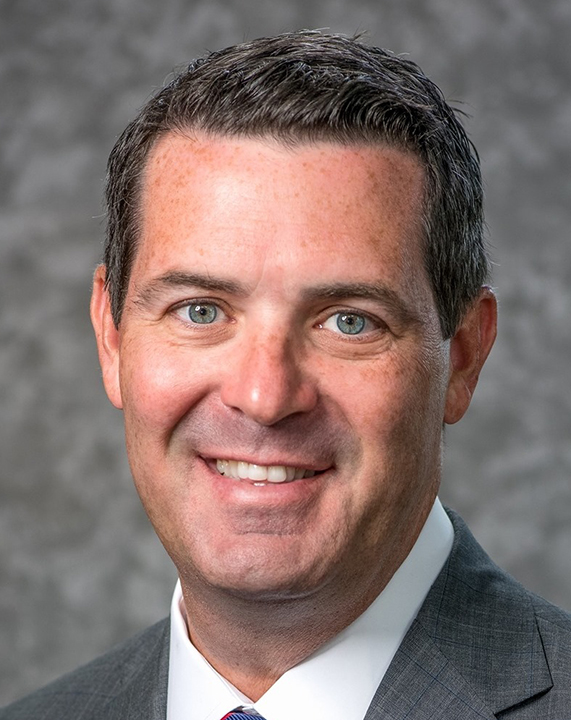
Jared Quigg is a reporter at The Correspondent who covers education, local government and feature news. Contact him at jquigg@morgancountycorrespondent.com or by calling 765-201-0005.